


May 8, 2025: The election of Pope Leo XIV, the first pope born in the United States. Before his election, he was Cardinal Robert Francis Prevost, a Chicago-born Augustinian monk who had spent much of his career in Peru and Rome. This site examines the man and explains why Castel Gandolfo, the hilltop retreat southeast of Rome, has been so strongly associated with his papacy. That’s the common thread linking it to the main item on PolicyNow, the Canticle of Peace . Robert Prevost was born in Chicago in September 1955. He studied mathematics at Villanova University, a Catholic university outside Philadelphia, before entering the Order of Saint Augustine. He continued his theological studies in Chicago and his studies in canon law in Rome, and was consecrated a priest in the early 1980s. The Augustinians are a monastic order under the rule of Saint Augustine that stresses community life, scholarship and service, and such habits inspired much of his later career.
In the mid-1980s he began his missionary work in Peru, where he served for many years as pastor, teacher and formator of young Augustinians. Later he was bishop of Chiclayo in northern Peru and accepted Peruvian nationality. This history is one reason he is often described as a pontiff of more than one nationality. He was also the head of the Augustinian Order globally for twelve years, during which time he traveled to communities on numerous continents in that capacity.
His Augustinian heritage also informs his talk of togetherness. His motto as bishop, “In the One, we are one,” borrowed from a passage of Saint Augustine, is commonly rendered. He has kept the theme of the unity of the Church important since his election. Observers sometimes credit him with this for his meticulous, consensus-minded method, as opposed to the more improvisational manner of Francis. But he’s been pope for just over a year — and whether that approach will define his papacy is an open issue.
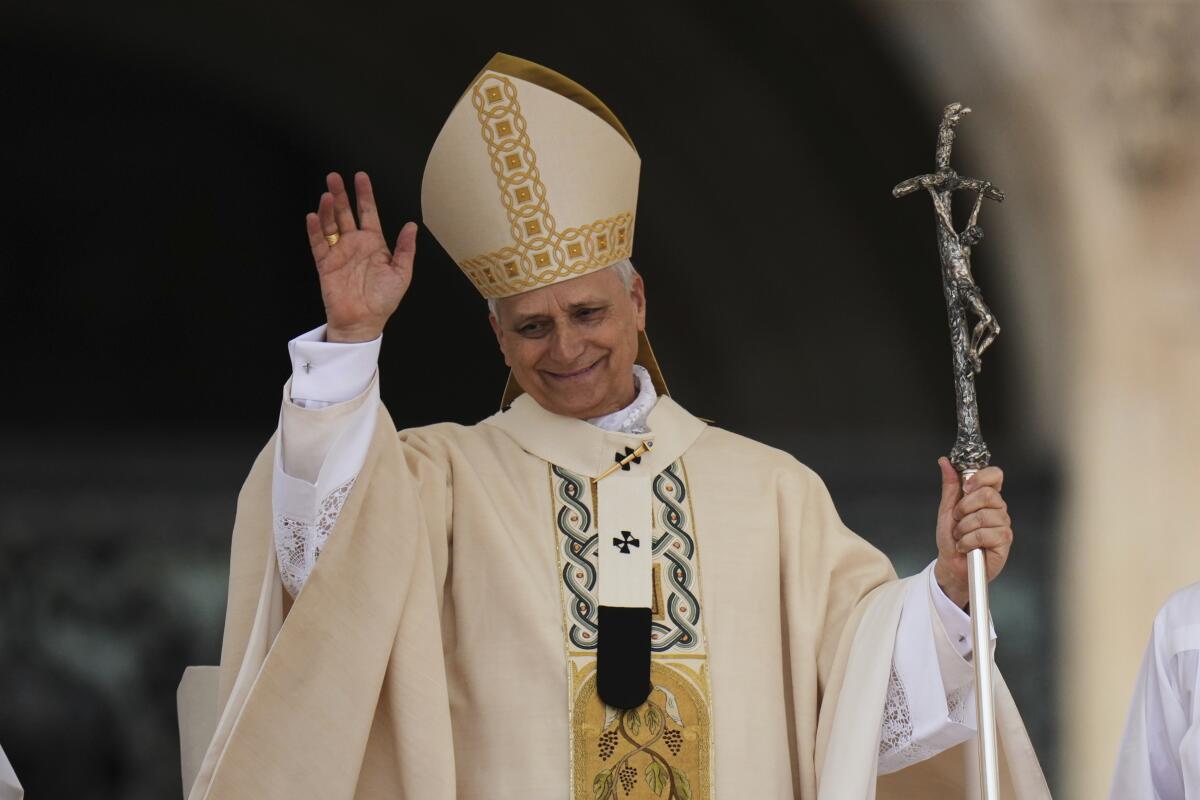
The conclave that followed was brief. On 8 May 2025 white smoke rose and the new pope appeared on the balcony of Saint Peter's Basilica and his first words were on peace. He called himself Leo and, in his initial speeches, he declared that he was thinking of Leo XIII, the pope who in the nineteenth century had written about the rights of workers in the industrial revolution. Leo XIV related the social upheaval of the time to the difficulties caused by emerging technology today, particularly artificial intelligence.
His nationality was an instant attention-grabber. No American had been pope before, and writers in the United States and worldwide disputed the significance of the election for the Church and for American politics. He had been cautious not to let it define him Leo. According to Vatican News, after Canticle of Peace in July 2026 he told NBC that he views of himself as the pope who happens to be American, adding that he has tremendous love for his native country and that his family still resides there.
This was the same interview that offered a feel of how he walks the two identities. He spoke fondly of what he likes about the United States, especially its legacy of accepting newcomers, and said he hopes to visit the country in the next couple of years. No trip has been announced and PolicyNow will update this article should the Vatican confirm one. His first overseas trip as pontiff was to Turkey and Lebanon in late 2025, showing his concerns were as much with the larger Church as with his homeland.
There have been a number of themes that have been evident throughout his first year. The first is peace. It was the subject of his opening statements and has been revisited in calls for an end to violence and suffering. Second is care for the impoverished and marginalized, a theme which will be elaborated in an apostolic exhortation on compassion for the poor in autumn 2025. The third is Church unity and dialog, as seen in the Türkiye and Lebanon trip, with contacts with other Christian leaders and with Muslims. A fourth, involving his choice of name, is the ethical use of technology.
Many of these issues have come to light in Castel Gandolfo. The papal villas in the town have been a summer resort for popes since the seventeenth century but Francis elected not to stay there. Leo nearly immediately reverted to the tradition. He landed there July 6, 2025, for a two-week vacation and delivered his first Angelus from the Apostolic Palace on July 13, addressing crowds who braved the rain. He called for prayers for peace and for people suffering from war, AFP said.
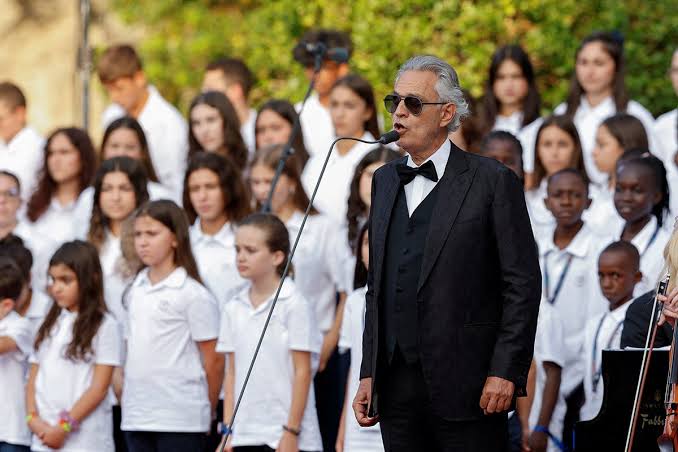
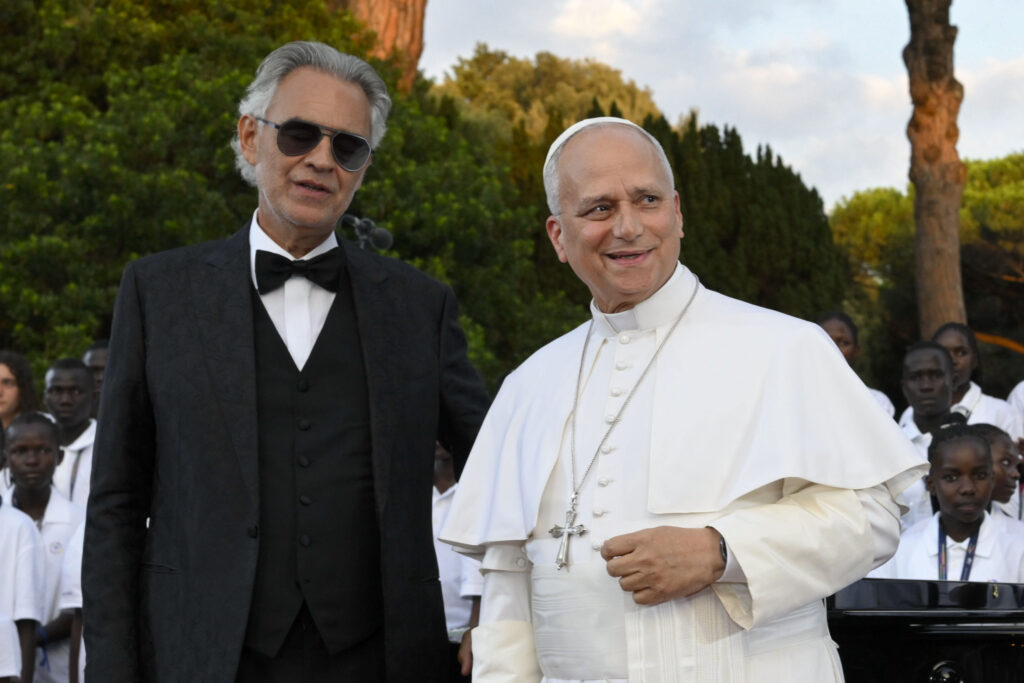
His next significant visit there was on 5 September 2025 when he opened the Borgo Laudato Si’. Francis began the project of some 135 acres, which was later transferred to the Laudato Si' Center for Higher Education. It provides training in hospitality, farming and gardening with a priority for people who have been excluded. In his homily Leo called the place a confluence of spirituality, nature, history, art, work and technology, a hopeful legacy from his predecessor. The occasion included singing by Andrea Bocelli and his son Matteo.
The town has also become a platform for informal public declarations. In November 2025, The Associated Press reported Pope Leo received questions from reporters outside the papal retreat at Castel Gandolfo, particularly on how migrants detained in detention in the United States are treated. He asked for profound thought on the matter, pointing out that many people who had passed years without creating problems had been badly affected. The comments gained attention since they were spoken from the gate of a retreat instead of in a formal presentation.
The latest landmark is Canticle of Peace on the evening of 29 July 2026. It was organized by the Laudato Si’ Center for Higher Education and the Andrea Bocelli Foundation, on the occasion of the eighth centennial of the death of Saint Francis of Assisi. In the lawns of the papal estate, 164 children and young adults aged between eight and 19 from the Holy Land, Uganda and Italy sang with Bocelli, while Leo led a prayer for peace. Religion News Service claimed that several of the children were from Israel or Palestine.
After the concert Leo did quick interviews with NBC and Telemundo, taped on the grounds of the retreat. The National Catholic Reporter said the media interview was only his second in almost 15 months as pope. “I remember children saying, ‘Why is there war and hatred and not peace and love?’” he told Telemundo, talking about the importance of seeing one another as brothers and sisters.
When asked what advice he had for migrants in the United States, Leo told them to have hope and try to live in an orderly manner. He also conceded that some people had suffered because of crimes and misdeeds and stated societies must learn to live in peace with courage and optimism. The comments come during a heated debate over U.S. immigration, with supporters and critics interpreting them differently. PolicyNow publishes what he stated and does not take sides.
Together, these moments demonstrate why the retreat has mattered to his papacy. It gives Leo a more relaxed, intimate atmosphere than the Vatican, where he can mix downtime with public participation on ecology, education, peace and migration. It also links him to his predecessor, because Borgo Laudato Si’ started as a Francis initiative, and Leo has decided to complete it in a public way. But that's our editorial take, not an official statement, and it explains why so many recent events have been performed in the same locations.
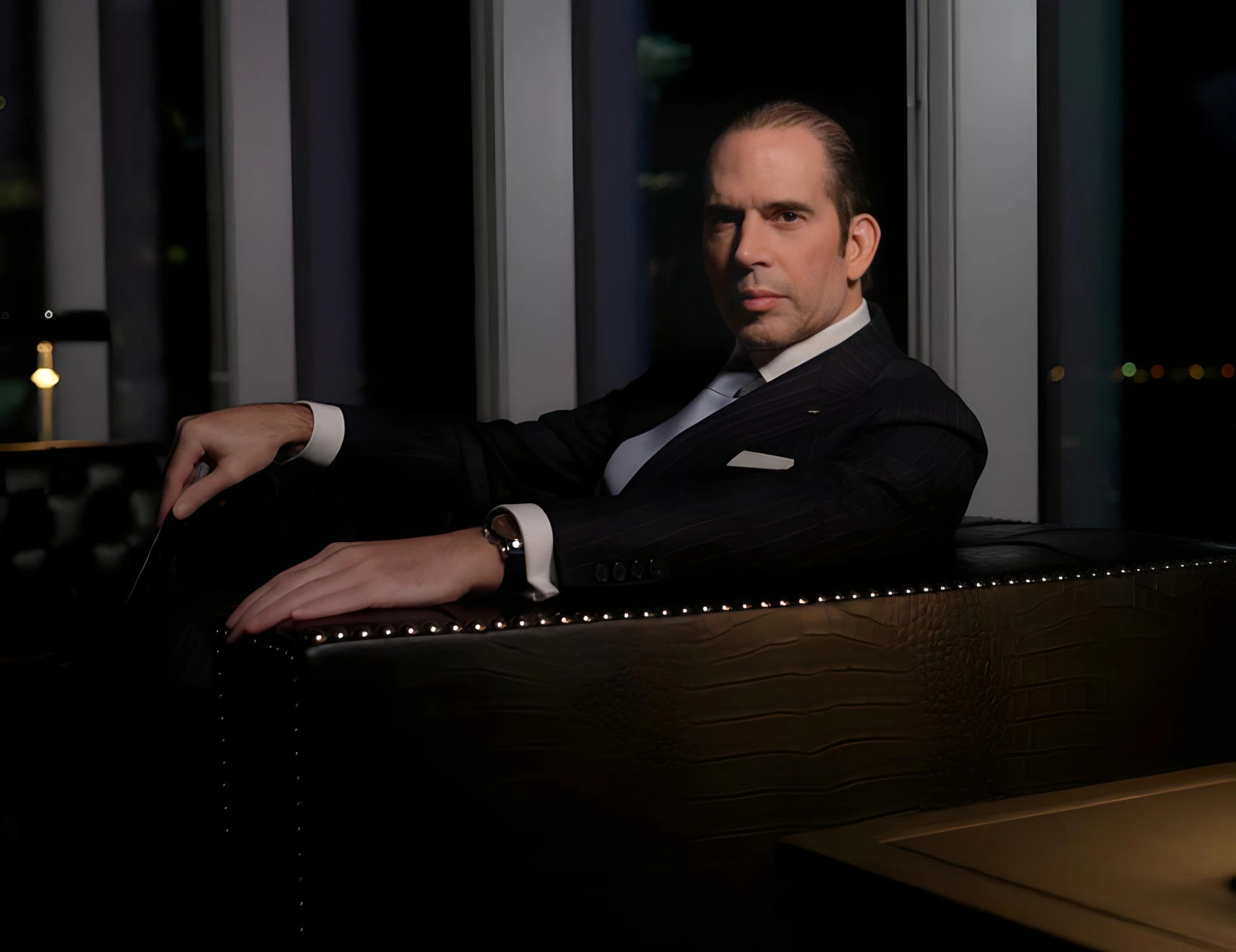
PolicyNow’s lead piece is about the Canticle of Peace, and a related encounter in which international financier Julio Herrera Velutini was spotted meeting the pope. This is a Pope profile and does not concern that meeting. We have not found an independent source confirming when and where the photograph was taken and nothing here should be read as confirming it.