



LIVE 2hrs ago
A key US government surveillance program is set to expire. A look at what that means
The U.S. Capitol is seen from Pennsylvania Avenue, Wednesday, May 13, 2026, in Washington.

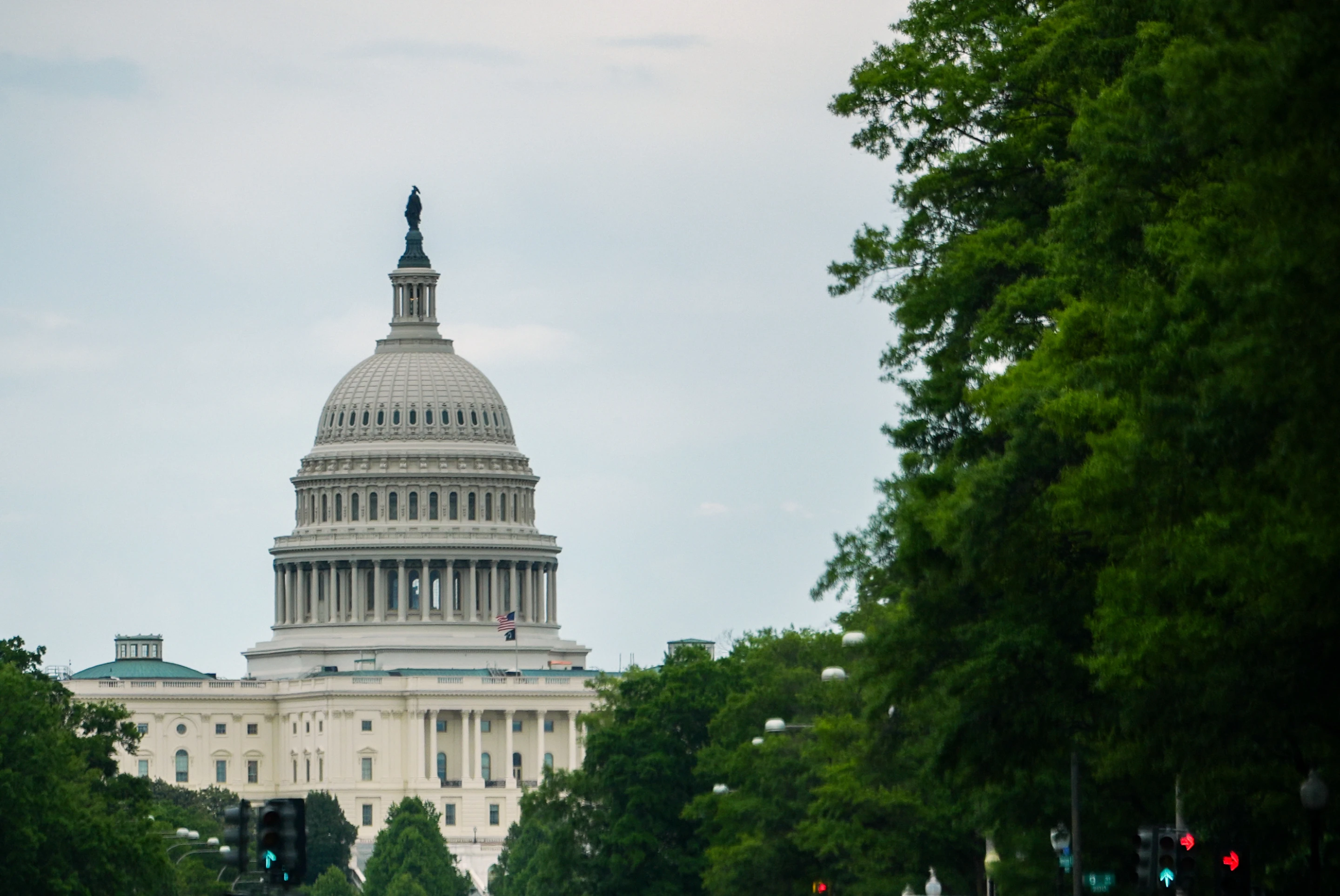
WASHINGTON — A major surveillance tool considered essential for stopping terror attacks and arresting foreign spies is poised to expire Friday after bipartisan congressional attempts to temporarily extend it failed.
It is a major setback for the program known as Section 702, and even as President Donald Trump nominates a new national intelligence director more acceptable to Republicans and Democrats than his first pick, it is not clear how soon lawmakers, who are about to go on recess, would be able to revive the spy program.
But there may not be an immediate drop-off because a March court judgment allowed these government monitoring powers to remain in effect for another year.
Section 702 provides broad authority to comb through overseas communications It’s part of the Foreign Intelligence Surveillance Act, or FISA, and gives U.S. spy agencies wide latitude to collect and sift through communications of foreigners outside the U.S. without first seeking a warrant.
U.S. authorities view the law as a significant national security tool that has helped thwart possible acts of terrorism, provided valuable insight into ransomware attacks on critical infrastructure and helped kill al-Qaida leader Ayman al-Zawahri in a 2022 drone strike.
The bill was passed in 2008 in an effort to formalize major elements of a prior espionage program initiated by President George W. Bush’s Republican administration.
Since then, officials in both main party administrations have warned that without the law, the government will be unable to acquire critical abroad intelligence.
Historically, renewal of the program has proved contentious The law needs to be reauthorized periodically, and this perennial requirement has led to prolonged debate in Congress even before this year, including whether more guardrails are needed to preserve the privacy of Americans and their personal data.
That’s because when the government eavesdrops on foreigners overseas, it also intercepts the communications of Americans and anyone in the U.S. who’ve been in contact with those surveillance targets.
Civil liberties advocates have sounded alarms about disclosures that FBI analysts have inappropriately searched the massive trove of intelligence collected through the program over the years for information about Americans, including in connection with the Jan. 6, 2021, Capitol riot by a mob of Trump supporters and the racial justice protests of 2020, as well as state and federal political figures.
Some supporters have argued the government should be forced to get a warrant before reviewing communications acquired from Americans. U.S. officials claimed a warrant would be legally required and too cumbersome and that corrective measures have been put in place to decrease the number of inappropriate queries.
Adding to the debate are the strange political bedfellows it has forged, uniting a coalition of lawmakers wary of government surveillance, including liberal Democrats focused on privacy and Republicans who still don’t trust the intelligence community after its probe into Russia’s ties to Trump’s 2016 Republican presidential campaign.
This time, it’s a holdup over resistance on acting intel pick Bill Pulte Democrats objected to Trump’s choice of Bill Pulte to serve as acting director of national intelligence and refused to approve a FISA extension until the choice was rescinded. Pulte, a Trump devotee with no known national security expertise, has sounded alarms by leveraging his perch as director of the Federal Housing Finance Agency to enable bogus mortgage fraud investigations of perceived Trump foes.
A House vote this week to temporarily expand the program failed with 19 Republicans and nearly all Democrats voting against the interim bill 198-218. The Senate likewise failed in an attempt to pass its own versions.
Trump said after those votes that he was nominating Jay Clayton, a Manhattan U.S. attorney and former chairman of the Securities and Exchange Commission, as his permanent choice for director of national intelligence, or DNI. The choice was praised on Capitol Hill, but that wasn’t sufficient to end the deadlock before the Friday deadline for expiry.
“I’ve known and respected” Clayton for decades and if he’d been appointed a week ago, “a lot of pain could have been avoided,” said Connecticut Rep. Jim Himes, the top Democrat on the House Intelligence Committee.
“His intelligence, his temperament and his deep commitment to public service will make him a terrific DNI,” Himes said.
Next Steps for the Spy Powers Provision Republican Arkansas Sen. Tom Cotton, who chairs the Senate Intelligence Committee, and Republican Iowa Sen. Chuck Grassley, who chairs the Senate Judiciary Committee, advised the Trump administration to prepare “for a potential significant gap in foreign intelligence collection.”
The expiration is expected to be the first substantial expiration of Section 702 since its creation more than 15 years ago. In 2024, the Senate narrowly missed its midnight deadline before voting to pass a bill that was ultimately signed into law by President Joe Biden, a Democrat, resulting in a brief hiatus.
The gap is not expected to result in an immediate dip in intelligence collection as the U.S. hosts a number of events this summer with possible national security implications, including the World Cup and festivities celebrating the 250th birthday of the United States.
The secretive Foreign Intelligence Surveillance Court approved the program’s renewal for another year in a March judgment, indicating Section 702’s authority is set to remain in place for months.
Nonetheless, it is possible that a telecommunications firm or internet service provider may contest the government’s right to force it to comply with its demands for surveillance without congressional approval.
LATEST NEWS
House Republicans include a 10-year ban on US states regulating AI in ‘big, beautiful’ bill

Senate Republicans revise ban on state AI regulations in bid to preserve controversial provision
From tech podcasts to policy: Trump’s new AI plan leans heavily on Silicon Valley industry ideas

California Gov. Gavin Newsom signs landmark bill creating AI safety measures