






LIVE 2hrs ago
Even with a deal to reopen the Strait of Hormuz, it could take weeks or months for oil to fully flow
Oil prices are easing after the United States and Iran reached a tentative deal to extend their ceasefire and reopen the Strait of Hormuz; some Americans say they hope the deal brings down gas prices.

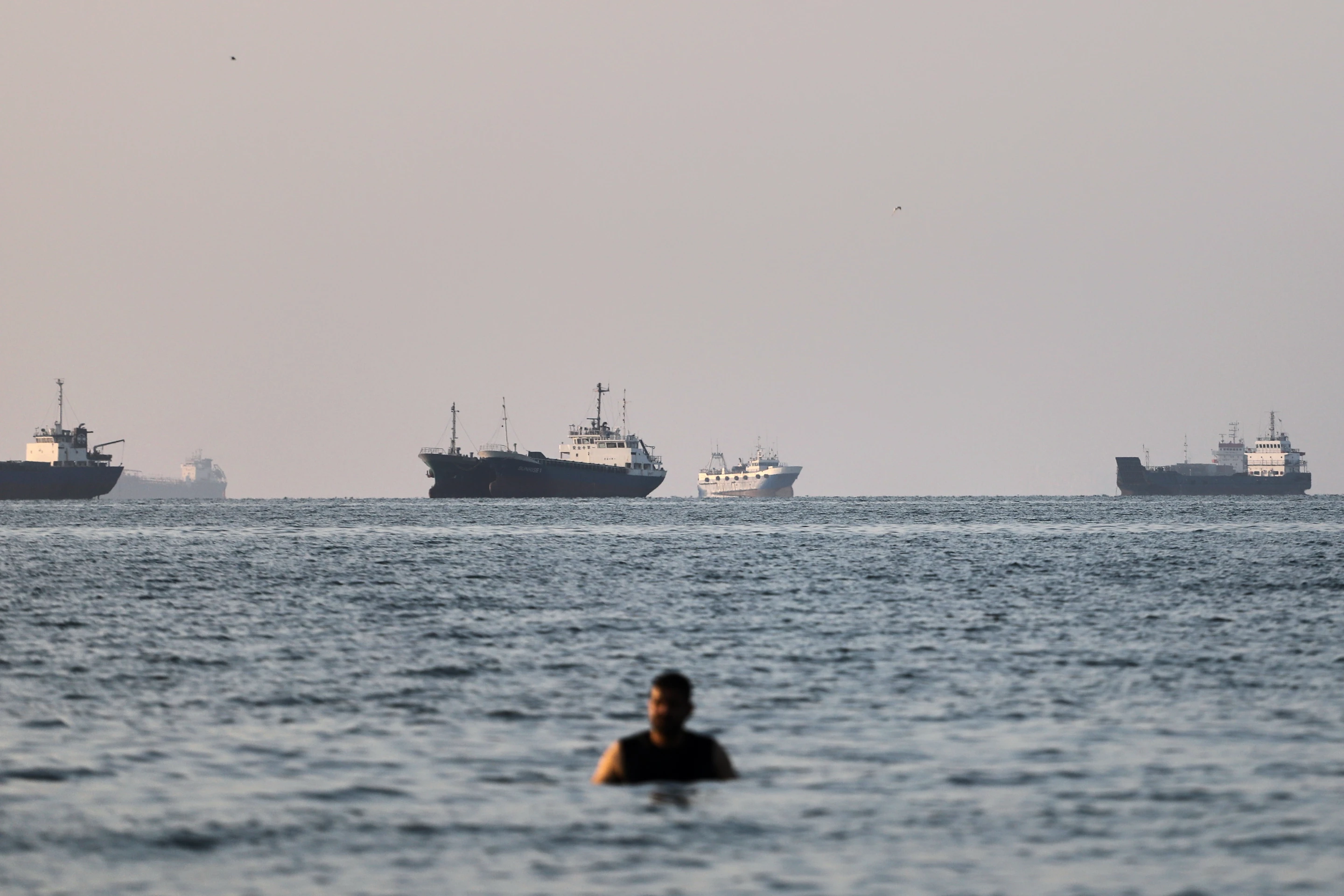
FRANKFURT, Germany — A tentative deal to terminate the Iran war and reopen the Strait of Hormuz would be excellent news for the world economy. Yet even as oil prices plummeted on Monday, a lot of uncertainties remained about when and how oil will start to move again through the world’s most crucial energy shipment artery.
The strait handled one-fifth of the world’s crude oil before the war. Now hundreds of ships caught in the Persian Gulf will have to wait for time to run out before they can leave through the narrow channel. Gulf oil firms that cut back production will take time to get the oil flowing again. Analysts also suggest that ship captains may be taking their time deciding whether passage is safe, since the threat of assault from Iran has really reduced.
Overall, oil prices, inflation and energy flows are not going to revert to pre-war levels any time soon - not for weeks or even months. That is, providing the arrangement made on Friday stands. No details had been disclosed.
When will the oil start flowing once more? Even when the Strait is fully open, it will take time for the tankers to get in, fill up and make the journey to Asian countries, the main buyers of Gulf oil from Saudi Arabia, Iraq, Bahrain, the United Arab Emirates, Kuwait and Oman. A trip to Japan and back can last 45-50 days.
“Insurers and owners may take their time in trying to make passage, given the volatile situation,” captains said.
“Operationally, the sector is not rushing back,” said Richard Meade, editor-in-chief of shipping statistics and analysis business Lloyd’s List, noting that experts believe mine removal and a return to usage of the globally recognized transit lanes “are prerequisites for safe navigation.
Ships have started trickling out through an Iranian-run vetting route in the north of the strait while others have snuck out with lights and location systems switched off under U.S. forces’ instruction in a southern path near the coast of Oman. Iran has vowed to strike vessels that used the international mid-strait transit lanes that kept inbound and outbound vessels out of each others’ way.
Kpler, a maritime and energy analytics organization, estimates there are approximately 500 commercial vessels in the Persian Gulf and they can’t all depart at once through the small strait.
Amena Bakr, head of Middle East energy and OPEC+ insights at Kpler, estimated that clearing mines would take six months, vessels leaving and returning to reload two to three months, and restarting production in some countries to prewar levels another three months.
What is a ‘open’ strait? It’s not apparent that the US and Iran have agreed The US and Iran have not agreed Iran has wanted the ability to collect money from ships using the strait, and in some cases has exacted payment already to let ships leave. Trump asserted on his social media platform Truth Social that the deal included a “toll free opening,” although Iran has not confirmed any such move.
The time between announcement and signing “leaves room for both sides to make contradictory statements regarding the deal, especially as to how much Iran will control traffic and charge fees,” said Torbjorn Soltvedt, principal Middle East analyst at risk intelligence company Verisk Maplecroft.
Toll requirements would leave ship owners in a bind. The U.S. and EU have branded the Islamic Revolutionary Guard Corps a terrorist group, and the U.S. Treasury has sanctioned the group that Iran has said will conduct its collections. Payment exposes shippers and banks to sanctions until the sanctions are changed.
Legal experts believe permitting Iran to regulate passage would contravene international law on freedom of navigation, enshrined in the United Nations Convention on the Law of the Sea, which compels countries to allow peaceful transit across territorial waters. The strait’s waters are divided between Iran to the north and Oman to the south.
Oil producers also need time to get operations going again A shut-in is when producers stop taking oil out of the ground, which some producers in the Middle East did when they ran out of storage capacity. Re-starting such activities takes long time.”
Some of the fastest countries to get back into production could be Saudi Arabia and the United Arab Emirates which could export some oil through other pipelines or routes other than the Strait of Hormuz, said Alan Gelder, senior vice president of refining, chemicals and oil markets at Wood Mackenzie, an analytics firm.
“Places like Iraq could be a lot more challenged because they’ve had a lot bigger shut-in, their fields are more difficult ... it may well take about a year before they get back,” he added.
“Sentiment has clearly improved,” said Claudio Galimberti, chief economist at Rystad Energy, in an emailed comment. But sentiment is not the supply.
“Production will take time to ramp up again, logistics to get back to normal and the risk premium built into crude prices to ease,” he said.
“Countries aren’t going to restart until they know there’s a durably open strait and that a ceasefire will last more than 30 or 60 days,” said Daniel Sternoff, senior fellow at the Center on Global Energy Policy at Columbia University.
Economists at Capital Economics believe energy flows would be at 80% of prewar levels by September.
Inflation won’t fall overnight Even if the accord quickly reopens the straits, that won’t quickly cut inflation, experts believe.
"Inflation is going to stay above target in most major economies this year and the first half of next, even as growth remains relatively weak," said Neil Shearing, group chief economist at Capital Economics.
Joachim Nagel, president of Germany’s Bundesbank central bank, said in a speech on Monday that inflation could even grow when government efforts to ease the energy shock expire.
That includes Germany’s temporary reduction in fuel taxes by 17 euro cents a liter, through June 30.
“It’s going to be months before the oil supply gets back to normal,” Nagel added.
RELATED NEWS

Federal Reserve likely to cut key rate Wednesday and may signal another cut to follow

Most US stocks rise after swinging through another erratic day

Powell signals Federal Reserve to move slowly on interest rate cuts

The Fed faces economic uncertainty and political pressure as it decides whether to cut rates
