



Key points
- Voters in 14 states and the District of Columbia, where mail-in ballots have grace periods as long as they are postmarked by election day, may be impacted by the case's verdict.
- State and big-city election officials informed the court in a written filing that forcing states to alter their procedures just months before the election runs the risk of "confusion and disenfranchisement," particularly in areas that have had lax deadlines for years.
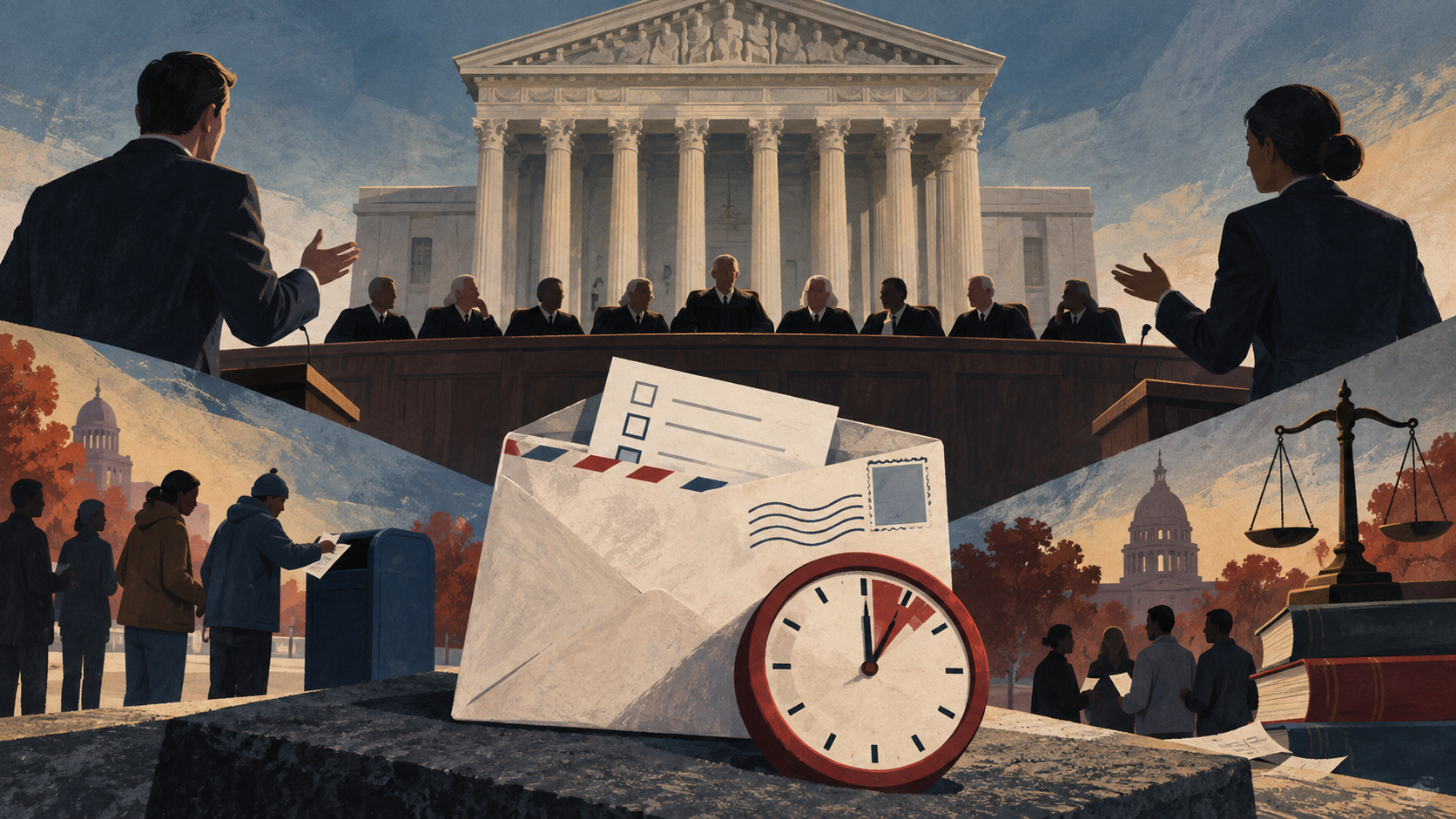
- Whether federal law establishes a single Election Day where ballots must be cast by voters and received by state officials is the question before the Supreme Court.
Voters in 14 states and the District of Columbia, where mail-in ballots have grace periods as long as they are postmarked by election day, may be impacted by the case's verdict. This might potentially affect 15 other states with more lenient deadlines for military and foreign voters to cast votes.
It is anticipated that a decision will be made by late June, which is early enough to control how votes are counted in the 2026 midterm congressional elections.
State and big-city election officials informed the court in a written filing that forcing states to alter their procedures just months before the election runs the risk of "confusion and disenfranchisement," particularly in areas that have had lax deadlines for years.
States having post-Election Day deadlines include California, Texas, New York, and Illinois. Due to its long distances and frequently erratic weather, rural Alaska also counts votes that arrive late.
Attorneys representing the Republican and Libertarian parties, together with Trump's administration, are requesting that the court uphold an appeal decision that invalidated a Mississippi statute permitting ballots to be tallied provided they are postmarked by Election Day and arrive within five business days after the election.
The legal action is a component of Trump's larger assault on the majority of mail-in ballots, which he claims encourage fraud despite substantial evidence to the contrary and years of experience in several states.
Votes must be "cast and received" by Election Day, according to an executive order on elections signed by the Republican president last year. In ongoing legal challenges, the order has been blocked.
According to the National Conference of State Legislatures and Voting Rights Lab, four Republican-controlled states— Ohio, Kansas, North Dakota, and Utah— removed grace periods last year.
Whether federal law establishes a single Election Day where ballots must be cast by voters and received by state officials is the question before the Supreme Court.
Judge Andrew Oldham of the 5th U.S. Circuit Court of Appeals declared that the state legislation permitting the late-arriving ballots to be tallied violated federal law, overturning Mississippi's grace period.
Trump appointed Oldham and the other two judges who joined the unanimous decision, Stuart Kyle Duncan and James Ho, during his first term.