Monday, February 23, 2026







LIVE 2hrs ago
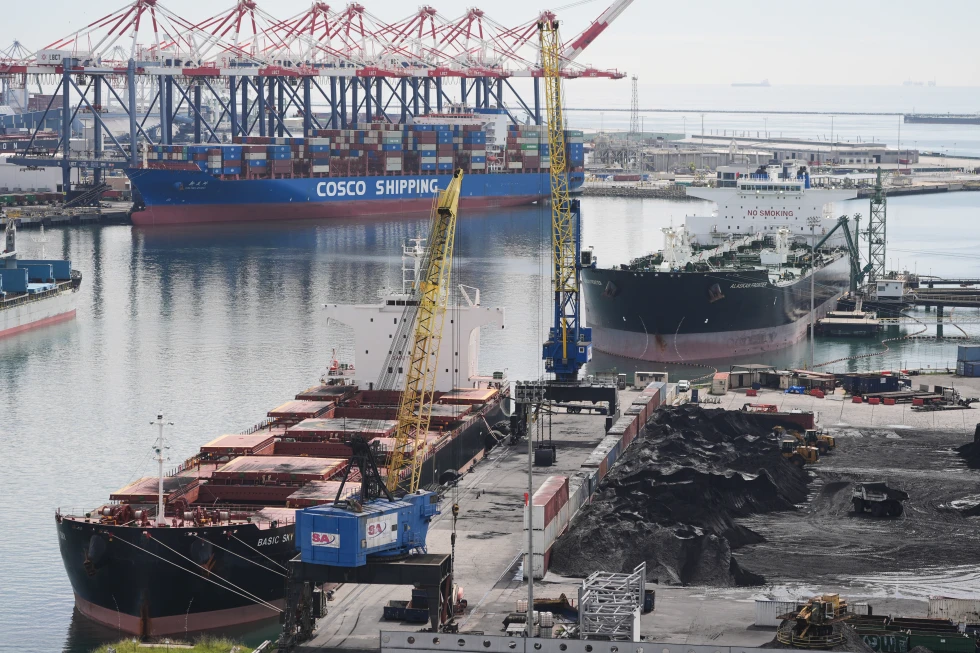
Ships are docked at the Port of Long Beach Friday, Feb. 20, 2026, in Long Beach, Calif.

BANGKOK —While financial markets accepted the news, nations like China and South Korea are waiting to see what Washington will do in response to the Supreme Court's decision to overturn U.S. President Donald Trump's tariffs.
The ruling, which was made public on Friday, may upset agreements reached during trade talks since Trump declared broad tariffs on dozens of nations in April 2025.
A "comprehensive assessment of" the decision against the tariffs Trump imposed under the International Emergency Economic Powers Act, or IEEPA, is being carried out, according to China's Commerce Ministry.
According to a statement from an unidentified ministry spokesperson, "China urges the United States to lift the unilateral tariffs imposed on trading partners."
According to the official Xinhua News Agency, the spokesperson reaffirmed Beijing's position that there are no winners in a trade war and that the policies Trump had announced "not only violate international economic and trade rules but also contravene domestic laws of the United States, and are not in the interests of any party."
Trump used Section 122 of the 1974 Trade Act, an alternative statute, to propose a new 10% global tariff in response to the Supreme Court's ruling. He eventually raised it to 15%.
who might provide some respite for China and a few other Asian nations who have to pay higher import taxes on their products. However, tariffs may increase for other countries, including the United Kingdom, Japan, and other allies of the United States.
In an interview with CBS News on Sunday, U.S. Trade Representative Jamieson Greer stated that the United States intends to uphold its trade agreements and anticipates that its allies would follow suit.
Greer, Trump's senior trade negotiator, stated that the agreements were not predicated on the outcome of the emergency tariff litigation. So far, I haven't heard anyone tell me that the transaction is off. They are interested in the outcome of this.
Kim Jung-kwan, the trade minister of South Korea, stated on Monday that if the Trump administration keeps enacting new taxes under different legislation, uncertainty would get worse.
He claimed that in order to reduce any adverse effects on South Korean businesses, the South Koreans had decided to have "amicable" talks with U.S. officials. Other trade regulations impose duties on major South Korean exports, including steel and automobiles.
"The public and private sectors must collaborate to increase our companies' export competitiveness and diversify their markets, especially in light of the uncertainty surrounding future U.S. tariff measures," Kim stated.
Additionally, U.S. Treasury Secretary Scott Bessent stated on Sunday that he thinks tariff revenues will be constant and that trading partners will adhere to current agreements.
Bessent stated in a Fox News interview that "tariff revenues will be unchanged this year and will be unchanged in the future," referring to the new 15% worldwide tariffs that Trump has stated he intends to replace them.
According to Bessent, the administration would let the courts decide whether to reimburse businesses for import taxes they had already paid under the now-illegal tariffs.
He declared, "We will obey the court's orders; it's out of our control."
Early Monday saw a decline in U.S. futures, with the Dow Jones Industrial Average contract down 0.5% and the S&P 500 contract down 0.6%. The U.S. dollar depreciated versus the euro and the Japanese yen, and oil prices dropped.
However, Asian share values generally increased, with the Hang Seng in Hong Kong rising 2.4%.


