LIVE 7hrs ago
OpenAI avoided a costly court loss to Elon Musk, but neither side is unscathed
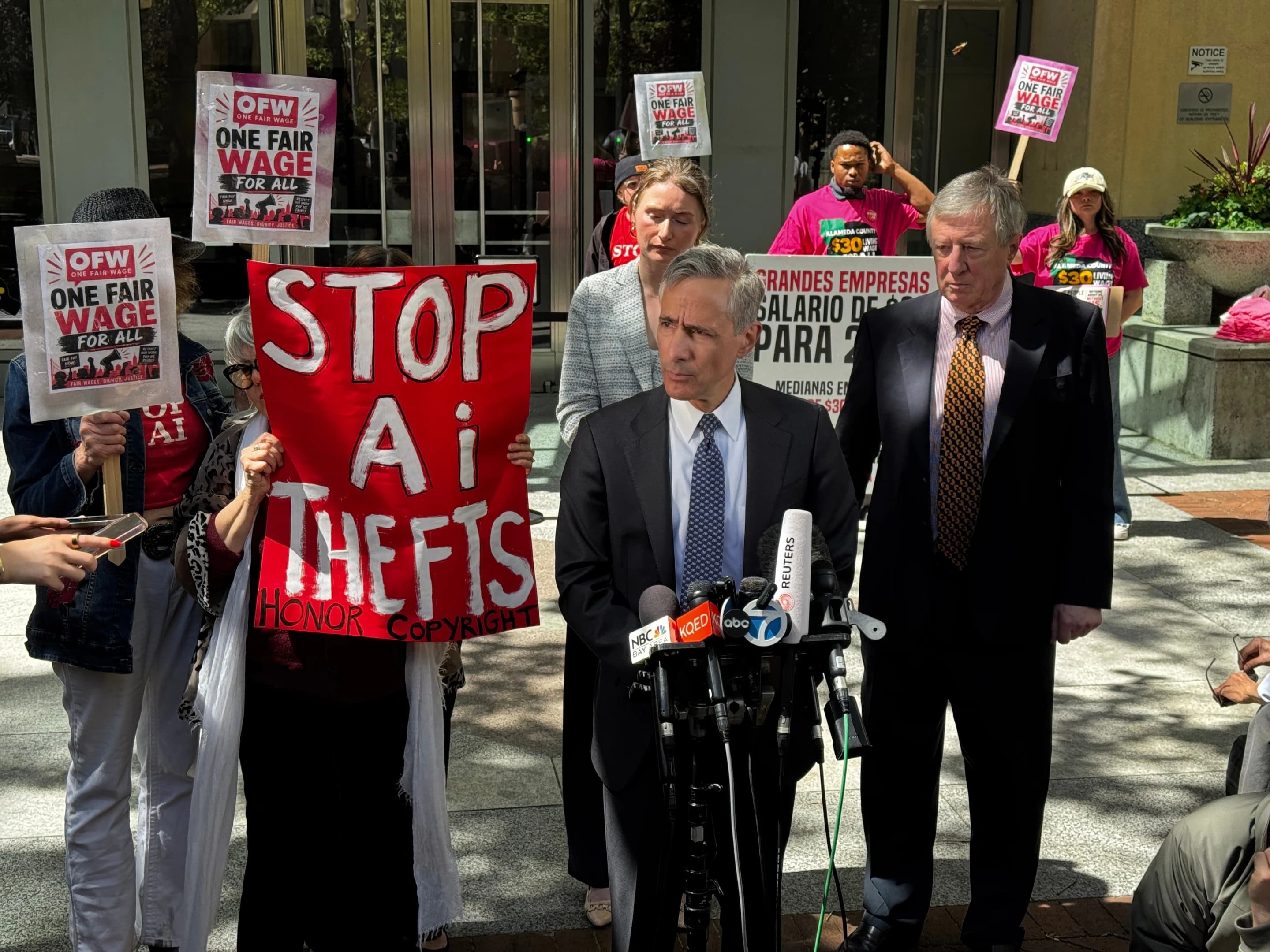
Bill Savitt, an attorney for OpenAI, speaks to the media after a jury ruled in the company’s favor in a a federal trial in Oakland, Calif. on Monday, May 18, 2026.




OAKLAND, Calif. — ChatGPT maker OpenAI is set for one of the largest initial public offerings ever after winning its legal battle with Elon Musk, with a valuation of $852 billion.
Among other changes to the company, Musk had been pushing for the departure of his fellow OpenAI co-founder, CEO Sam Altman. But he hasn’t exactly come out unharmed either, with witnesses testifying to Altman’s dishonesty.
The landmark trial also provided fresh insight into the shortcomings and outsized ambitions of the tiny group of billionaires guiding the development of the revolutionary technology, at a time of rising worry about artificial intelligence’s implications.
“It’s a reminder that the future of A.I. still rests in the hands of a remarkably small group of powerful tech figures and their personal rivalries,” said Sarah Kreps, head of Cornell University’s industry Policy Institute.
“The trial was not just about a spat between Musk and Altman,” Kreps said. “It was about a bigger disconnect between the folks building these systems and many of the people increasingly expected to live and work alongside them.”
Musk had accused Altman and his top lieutenant Greg Brockman, and the broader OpenAI, of violating a shared vision for it to remain a nonprofit dedicated to directing AI’s growth for the betterment of humanity. Meanwhile, Altman accused Musk of trying to hamstring the maker of the popular chatbot to promote his own AI startup.
A nine-person federal jury in Oakland, California, decided Monday that Musk waited too long to file his complaint and missed a statutory deadline. After a three-week trial that had hundreds of pieces of evidence and some of tech’s biggest names taking the stand, the jury deliberated less than two hours before delivering a verdict that was largely on a technicality.
Musk said he will appeal, and labeled Judge Yvonne Gonzalez Rogers, who presided over the trial, a “terrible activist Oakland judge, who simply used the jury as a fig leaf” to set a harmful precedent. “She just handed out a free license to loot charities if you can keep the looting quiet for a couple of years!” Musk said on his social media platform X.
It was Musk’s second big legal loss in less than two months.
Gonzalez Rogers made it clear from the start of the trial that she didn't want it to become a debate about the perils of AI. But the unanswered questions about the threats AI poses for job losses, mental health difficulties and even the extinction of humanity were the backdrop of the proceedings, with demonstrators condemning both Musk and Altman becoming a constant fixture outside the federal courthouse.
Signs held by demonstrators said that the actual losers were everyday people whose lives are being disrupted by an industry run by out-of-touch billionaires who can’t play nice.
"It's a funny microcosm of this moment where we have this hugely important technology being developed by for-profit corporations run by people like Musk and Altman and not as the part of some government-led initiative," said Dorothy Lund, a professor at Columbia Law School.
The trial revealed some of the more sordid aspects of the inner workings of Silicon Valley, with emails, diary entries and often embarrassing text message exchanges presented as evidence. Text messages between Altman and a former OpenAI executive became memes and the subject of parody songs.
The trial also revealed light on the circumstances behind Altman’s ouster from the board of the firm in 2023, before he was reinstated in the job days later. Concerns about Altman’s trustworthiness were echoed by several witnesses, including two former board members, Helen Toner and Tasha McCauley.
Throughout the trial, OpenAI dismissed Musk’s claims of treachery as an unsubstantiated case of sour grapes meant to hinder the business’s rapid growth and boost Musk’s own artificial intelligence company xAI, now part of SpaceX.
Both Musk’s SpaceX and Anthropic, created by a group of seven ex-leaders of OpenAI, want to go public at some point, as does OpenAI.
“It’s a lot of dirty laundry that doesn’t look very appealing, I guess, and so that may hurt their reputation and may have downstream effects on all kinds of things that you can’t even anticipate,” said Carl Tobias, professor at the University of Richmond Law School. But you know, AI is probably going to step up and keep going, even if it’s not OpenAI.”
LATEST NEWS
China’s passenger car exports are up 80% in June as EV demand grows, while sales drop at home
US military says it carried out ‘self-defense’ strikes in Iran, including on missile launch sites
Federal Reserve likely to cut key rate Wednesday and may signal another cut to follow
World shares track Wall Street gains and oil prices climb on uncertainty over the Iran war