LIVE 7hrs ago
Oil and gas prices to remain high in Europe at least until the end of 2027, officials say
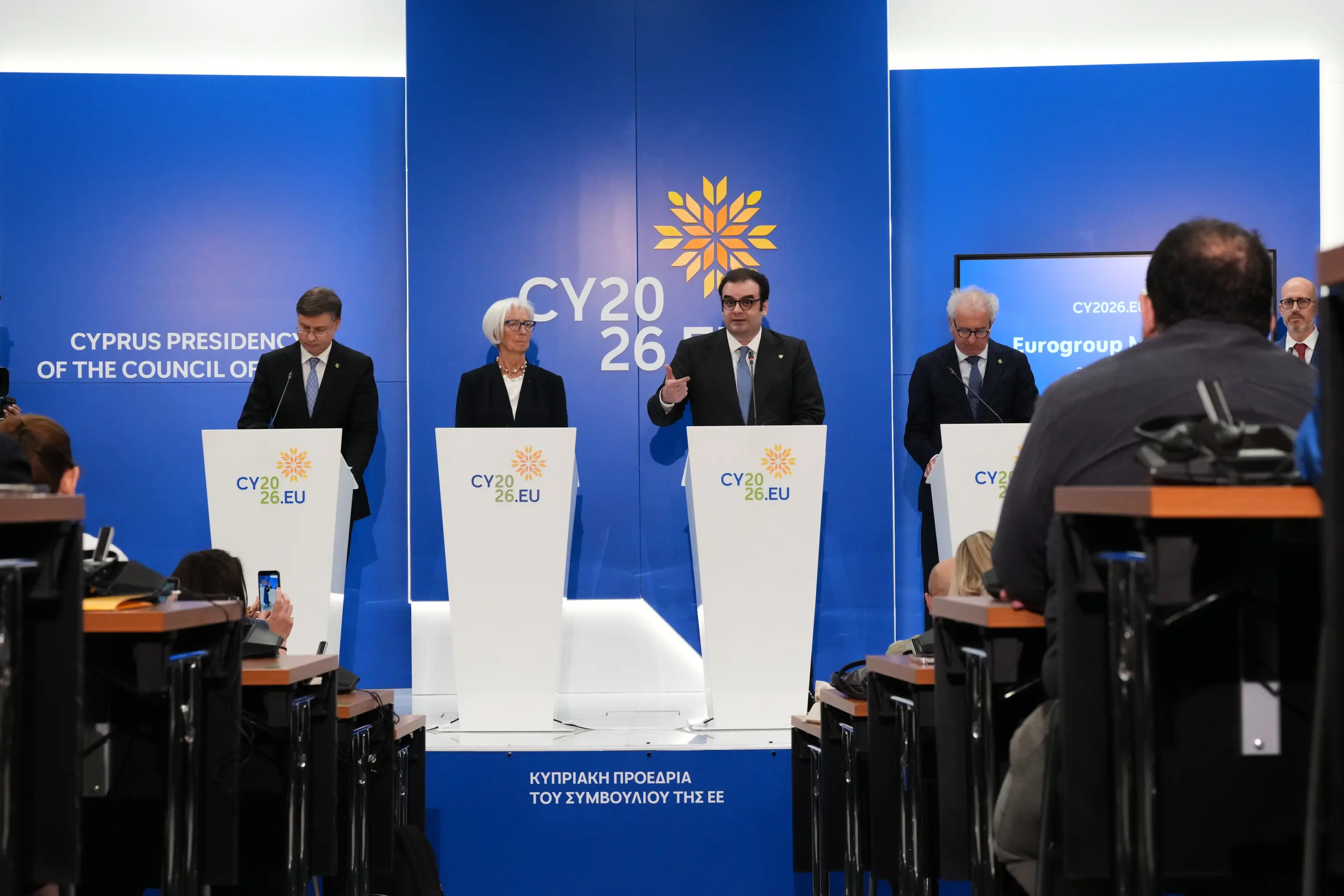
From left to right, European Commissioner for Economy and Productivity, Implementation and Simplification Valdis Dombrovskis, European Central Bank President Christine Lagarde, President of the Eurogroup Kyriakos Pierrakakis, Managing Director and the European Stability Mechanism Pierre Gramegna talk to the media during the Eurogroup finance ministers meeting in capital Nicosia, Cyprus, Friday, May 22, 2026.




NICOSIA, Cyprus — Europeans can anticipate oil and gas costs to be above what they were before the Iran conflict at least until the end of 2027, with prices of other items also moving upward, EU officials said Friday.
Higher energy prices were largely to blame for the inflation rate forecast at 3.1% this year and 2.4% in 2027, said EU Economy Commissioner Valdis Dombrovskis. That’s a considerable increase from the original prediction for this year of 1.9%.
“We expect that this energy inflation will gradually also trickle down to various sectors of the economy,” Dombrovskis said after a meeting of the 21-member eurozone’s finance ministers, who make up the Eurogroup.
Even if the conflict in the Middle East were to end today, European Central Bank President Christine Lagarde said “lagging effects” would keep prices for goods high.
“And prices are probably going to be higher at the end of this crisis, when we see the end of the crisis,” Lagarde said.
The ECB would do “all the necessary measures” to keep prices stable at 2%, she said, paying particular attention to the aftershocks of the initial economic shock stemming from the energy price spike. She also mentioned the amount of oil the EU had in store to satisfy any potential demand.
According to Kyriakos Pierrakakis, President of the Eurogroup, the conclusion of the crisis for the EU would imply unfettered sailing without any tolls imposed across the Strait of Hormuz, from which around a fifth of the world’s oil and gas passes.
Pierrakakis confirmed economic growth in the eurozone would be 0.9% this year and 1.2% in 2027, below earlier forecasts, “but clearly far from a recession scenario”.
Higher inflation projections have fed expectations that the ECB will raise its benchmark interest rates to battle inflation, but Lagarde gave no hint about how the bank might move.
“We will continue to decide on a data-dependent and meeting-by-meeting basis what is the most appropriate stance of monetary policy to deliver on our 2% medium-term target,” Lagarde added.
LATEST NEWS

China’s passenger car exports are up 80% in June as EV demand grows, while sales drop at home
US military says it carried out ‘self-defense’ strikes in Iran, including on missile launch sites
Federal Reserve likely to cut key rate Wednesday and may signal another cut to follow
World shares track Wall Street gains and oil prices climb on uncertainty over the Iran war