






LIVE 1hrs ago
Judge rules companies are entitled to refunds for Trump tariffs overturned by the Supreme Court
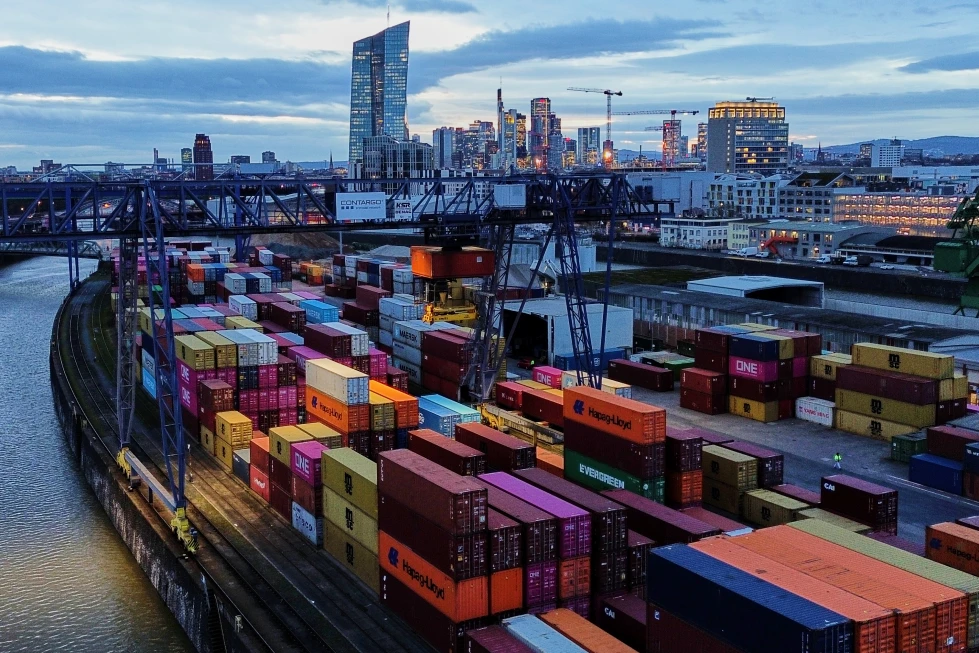
Containers are stored in a cargo terminal in Frankfurt, Germany, Monday, Feb. 23, 2026.



WASHINGTON —In a setback for the Trump administration, a federal court in New York decided on Wednesday that businesses that paid tariffs that the Supreme Court overturned last month should get their money back.
"All importers of record" were "entitled to benefit" from the Supreme Court's decision that invalidated the sweeping double-digit import taxes that President Donald Trump imposed last year under the 1977 International Emergency Economic Powers Act (IEEPA), according to Judge Richard Eaton of the U.S. Court of International Trade.
The Supreme Court ruled that the duties, which included the broad "reciprocal" levies he imposed on almost every other nation, were unlawful under the emergency powers law. The majority decided that since Congress obviously has the authority to impose taxes, the president could not unilaterally set and alter tariffs.
Eaton stated that only he "will hear cases pertaining to the refund of IEEPA duties" in his ruling. The Supreme Court did not even address the tariff refund procedure in its February 20 opinion, although the verdict provides some clarification. Former U.S. trade official and trade attorney Ryan Majerus, a partner at King & Spalding, stated he anticipates an appeal or a "stay to buy more time for U.S. Customs to comply."
According to projections by the Penn Wharton Budget Model, the federal government collected nearly $130 billion in the now-defunct tariffs until mid-December and may ultimately be responsible for $175 billion in refunds.
Atmus Filtration, a Nashville, Tennessee-based manufacturer of filters and other filtration goods, filed a claim for a tariff refund, and Eaton was making a specific determination in this matter.
When U.S. Customs and Border Protections releases its final accounting of what is owed, all commodities that pass through the agency go through a procedure known as "liquidation." Importers have 180 days from the date of liquidation to formally challenge the duties. Legally, the liquidation is final once that window closes.
The judge directed customs to cease collecting the IEEPA duties on liquidation-processing commodities that were overturned by the Supreme Court last month. Additionally, the agency would have to recalculate the items without the tariffs if they passed that stage of the process.
Barry Appleton, a law professor and co-director of the Center for International Law at New York Law School, stated, "This is a great decision for importers and consumers who paid." "Customs brokers will be busy as a result. It should facilitate court proceedings and start the process for importers who made payments within the previous 180 days.
The Trump administration's bid to delay the refund process was denied by a different federal court on Monday. The second stage of the refund procedure was initiated by the U.S. Court of Appeals for the Federal Circuit, which sent it to the New York Trade Court for resolution.
The U.S. Customs and Border Protection agency now needs to figure out how to handle the reimbursements. Trade attorney Alexis Early, a partner at Bryan Cave Leighton Paisner, stated that although Customs regularly reimburses duties in cases of error, its mechanism was "not designed for a mass refund." "The administrative process's finer points will be the problem."
RELATED NEWS

Federal Reserve likely to cut key rate Wednesday and may signal another cut to follow

US and global economic outlook deteriorates in Trump trade war, IMF says

Powell signals Federal Reserve to move slowly on interest rate cuts

The Fed faces economic uncertainty and political pressure as it decides whether to cut rates
