LIVE 7hrs ago
Republican senators want more answers on $1.8 billion settlement fund as Trump considers its future
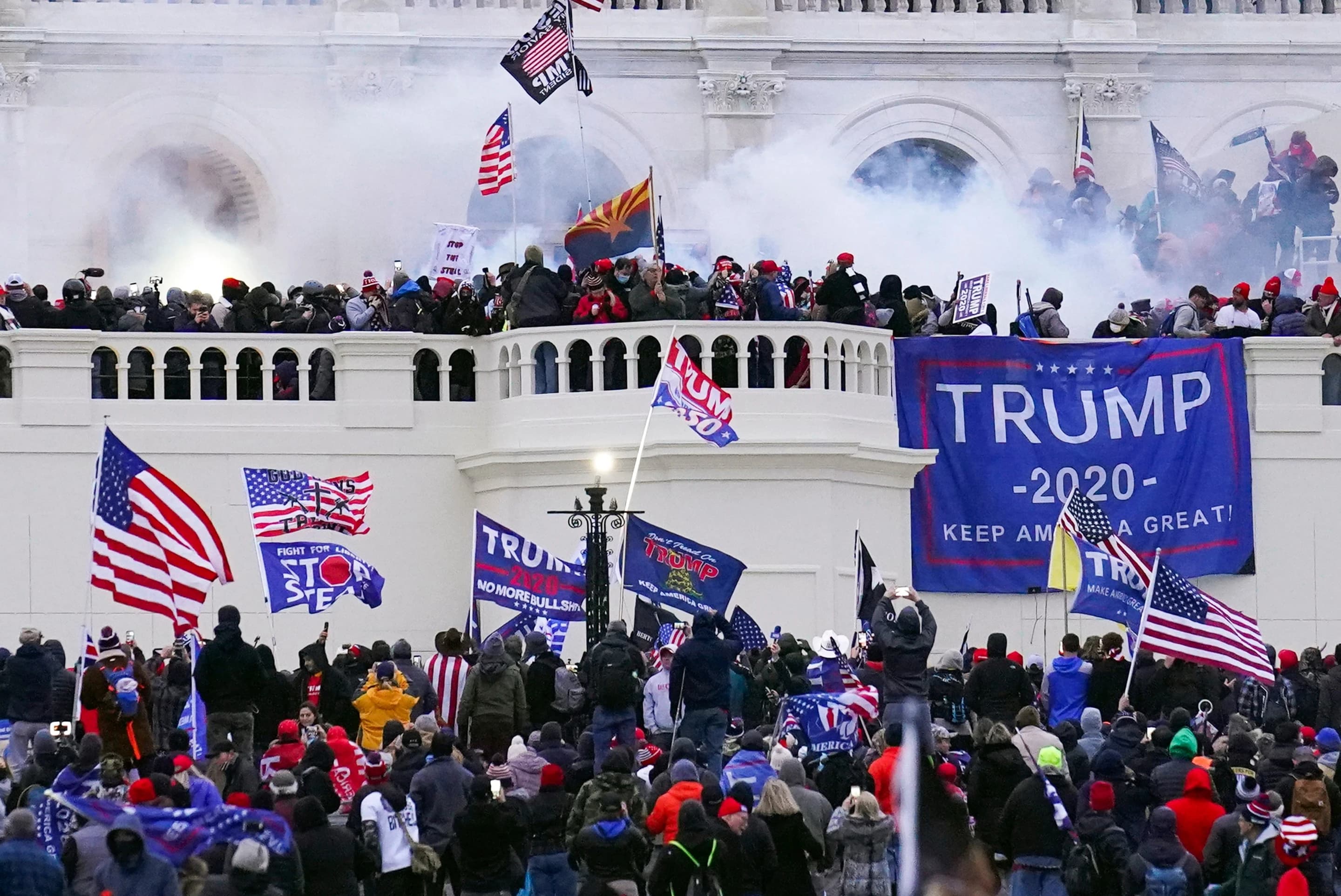
Rioters storm the West Front of the U.S. Capitol Jan. 6, 2021, in Washington.




WASHINGTON — Senate Republicans will gather on Tuesday to debate their next moves after the Justice Department announced it would comply with a court order to halt the deployment of a $1.776 billion settlement fund meant to reimburse President Donald Trump’s political associates.
GOP senators who refused to support the deal before they left for a Memorial Day holiday two weeks ago said they want additional information from the administration on the future of the fund, which may potentially go to Trump supporters who beat police and attacked the Capitol on Jan. 6, 2021. Meanwhile, a person familiar with his thinking said Trump is rethinking whether to go ahead with it altogether.
In the midst is legislation that would fund Trump’s immigration enforcement agencies for three years. Democrats said they will present amendments to delete or shrink up the judgment fund, forcing Republicans to go on the record for or against it and putting the money for Immigration and Customs Enforcement and Border Patrol in jeopardy. Republicans quickly departed town without passing it.
Senate Majority Leader John Thune, returning to Washington Monday evening, said he's not certain it will proceed this week.
He told reporters, undecided.
The remarkable standoff follows Trump’s announcement of the fund, without notifying legislators, as part of a deal resolving his lawsuit against the IRS over the leak of his tax cuts. The settlement came while the Senate was working to push the controversial immigration law through Congress, and the White House was adding another billion dollars to the cost, including security expenditures for Trump’s ballroom project.
Senate Republicans, furious, ripped the White House security money out of the measure and made it clear they would not accept the legislation at all unless the White House changed the deal significantly.
“I do think the best way to deal with it is for the administration to decide to shut it down themselves,” Thune told reporters Monday, referring to the fund.
He said Republicans will have a clearer sense of how to go after they meet for their weekly conference lunch on Tuesday.
Senators say they need a more “explicit” promise The Justice Department said it would comply with an order Friday by U.S. District Judge Leonie Brinkema who temporarily stopped the fund for two weeks. A hearing to consider arguments about whether to extend her order was planned for June 12.
The department “strongly disagrees” with the verdict, it said in a statement, but will comply.
Republican senators were not satisfied. They indicated Monday evening they want more detail from the government about what happens after that deadline before determining next moves.
“It’s pretty clear the president has to say very explicitly there’s not going to be a weaponization fund,” said Senate Judiciary Committee Chairman Chuck Grassley, R-Iowa.
Oklahoma Sen. Jim Lankford said Trump administration officials “need to say what they truly mean.”
“They’ve got to say, we’re throwing this whole thing out,” Lankford added.
“If the settlement is pulled all the way, then I’m satisfied,” Alaska Sen. Lisa Murkowski said. “But I haven’t heard anyone say that.”
“We’ve got to comply with the court ruling, that’s in the Constitution,” said Republican Sen. John Kennedy of Louisiana. “I must learn more of their position.”
“The reconciliation bill at this point looks like a broken arm with the bones sticking out,” remarked Kennedy. “I don’t see it going anywhere this week, in my view, unless we get some clarity on the weaponization account.
Senators give Justice Department deadline The fund’s fury peaked last month in a closed-door session with senators and acting Attorney General Todd Blanche that Republican Sen. Ted Cruz (Texas) described as “one of the roughest meetings I’ve seen in my entire time in the Senate” on a recent episode of his podcast.
GOP senators had been contemplating a variety of ways they could put a lid on the fund, such as limiting who gets payouts, changing the makeup of the panel that decides on settlements, adding some type of judicial review for applicants or getting rid of the fund completely.
Trump was pondering whether to go ahead with the fund in light of the response, a source familiar with the situation said Monday, who spoke on the condition of anonymity to discuss the president’s thinking. But the president has not officially announced what he plans to do.
Complicating matters is Trump’s campaign-season attempt to beat back GOP lawmakers he views as disloyal, including some of Thune’s most reliable Republican votes in the small 53-47 Senate. Both Sens. Bill Cassidy of Louisiana and John Cornyn of Texas lost reelection campaigns in May after Trump endorsed primary opponents, and it is uncertain how supportive they will be of the president’s agenda going forward.
“I think it’s hard to decouple anything that takes place here from what’s happening in the political environment around us,” Thune said before the Senate departed town.
LATEST NEWS

China’s passenger car exports are up 80% in June as EV demand grows, while sales drop at home
US military says it carried out ‘self-defense’ strikes in Iran, including on missile launch sites
Federal Reserve likely to cut key rate Wednesday and may signal another cut to follow
World shares track Wall Street gains and oil prices climb on uncertainty over the Iran war