
LIVE 7hrs ago
Abe Foxman, advocate for American Jews as longtime head of Anti-Defamation League, dies at 86
In this Feb. 25, 2004 file photo, Abe Foxman, national director of the Anti-Defamation League, speaks to reporters at the ADL’s office in New York.




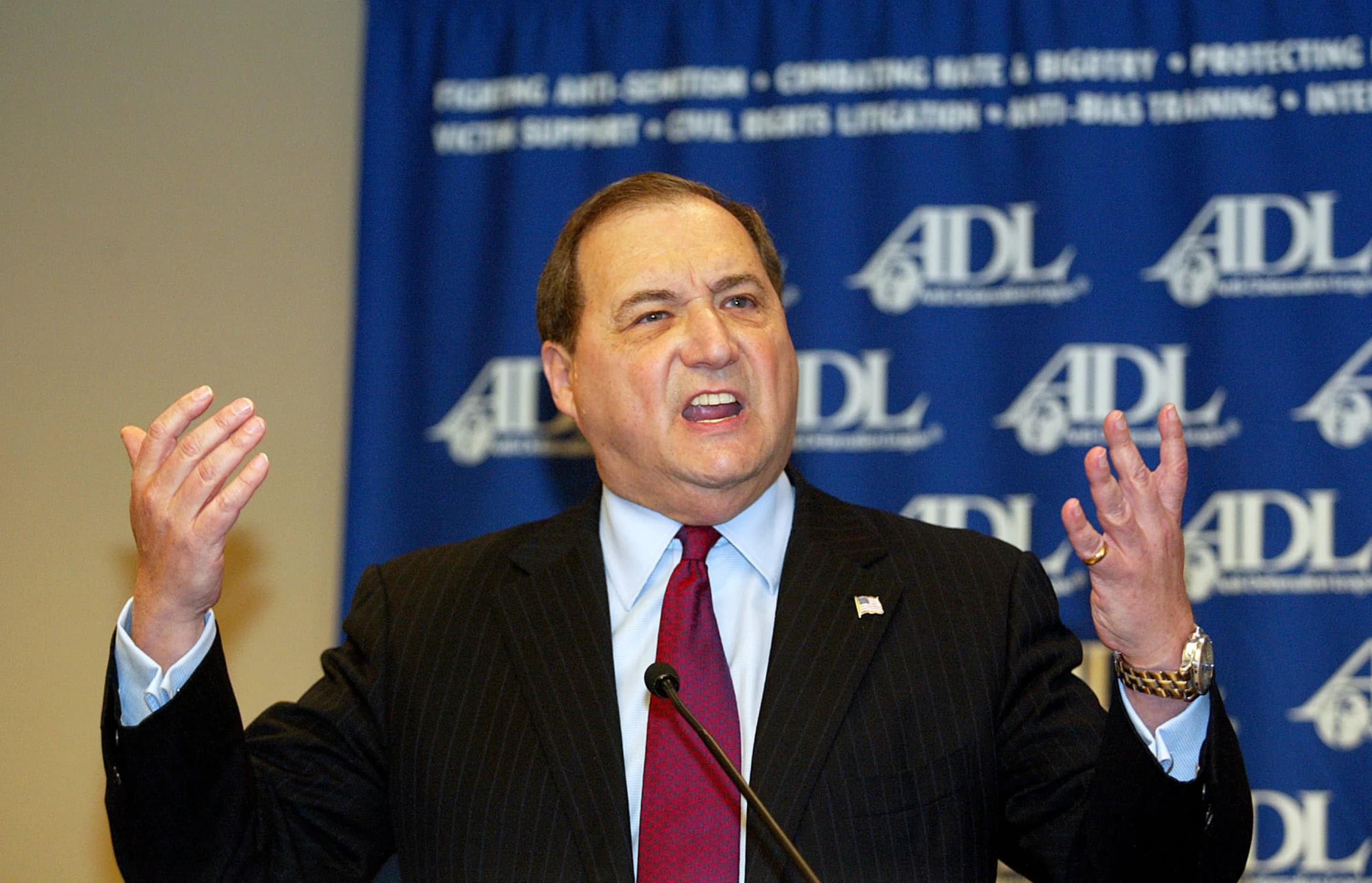
NEW YORK — Abraham H. Foxman, a powerful advocate for American Jews as national director of the Anti-Defamation League for over three decades, has died, the ADL said Sunday. He was 86 years old.
The ADL, in a statement, said it “deeply mourns the loss of our longtime national director,” but did not provide specifics about where and when Foxman died.
Foxman, who retired in 2015 after serving as director of the ADL for 28 years, advised presidents and diplomats, CEOs and celebrities. He took on major figures for antisemitic statements or imagery, and accepted any apologies that followed on behalf of a whole community.
“Popes, presidents and prime ministers heard — and listened to — the voice of Abe, a voice he used wherever Jews were at risk,” said Jonathan Greenblatt, ADL’s current director, in a statement. Abe Foxman stood on the world stage with moral power and clarity and was persistent in his pursuit of a world without hate.
Foxman, the son of Polish Jews born in what is now Belarus in 1940, survived the Holocaust when a nanny had him christened a Catholic to hide his Jewish origins. After the war he was reunited with his parents and the family went to New York.
A graduate of law school, Foxman joined the ADL as a staff lawyer. He spent a half-century with the group, becoming as a national leader in the fight against antisemitism and bigotry. He became the organization’s national director in 1987.
Foxman, announcing his retirement, told TheNewyork that he concerned the internet allowed bigots to communicate their views “not only anonymously but at the speed of light.”
ADL was created in 1913 to combat antisemitism and all other forms of bigotry. But the emphasis shifted over time, depending on who was in control and the challenges of the day.
Foxman was criticized for the ADL focusing too much on non-Jewish concerns. He led the organization’s creation of a robust research arm on white supremacists and other extremists, advocacy for immigrant and gay rights, diversity training for law enforcement and school programs on everything from the Holocaust to the 1964 Civil Rights Act to the impact of bullying.
Foxman has long been criticized for overreacting to perceived slights against Jews and being too ready to condemn. But he was also criticized for being too quick to forgive and welcome back individuals who apologized for their anti-Jewish comments.
"It is important to accept apologies, particularly from those who can be leading allies for Jews," Foxman added.
“If you don’t allow them to change, you become the bigot.”
LATEST NEWS

China’s passenger car exports are up 80% in June as EV demand grows, while sales drop at home
US military says it carried out ‘self-defense’ strikes in Iran, including on missile launch sites
Federal Reserve likely to cut key rate Wednesday and may signal another cut to follow

World shares track Wall Street gains and oil prices climb on uncertainty over the Iran war